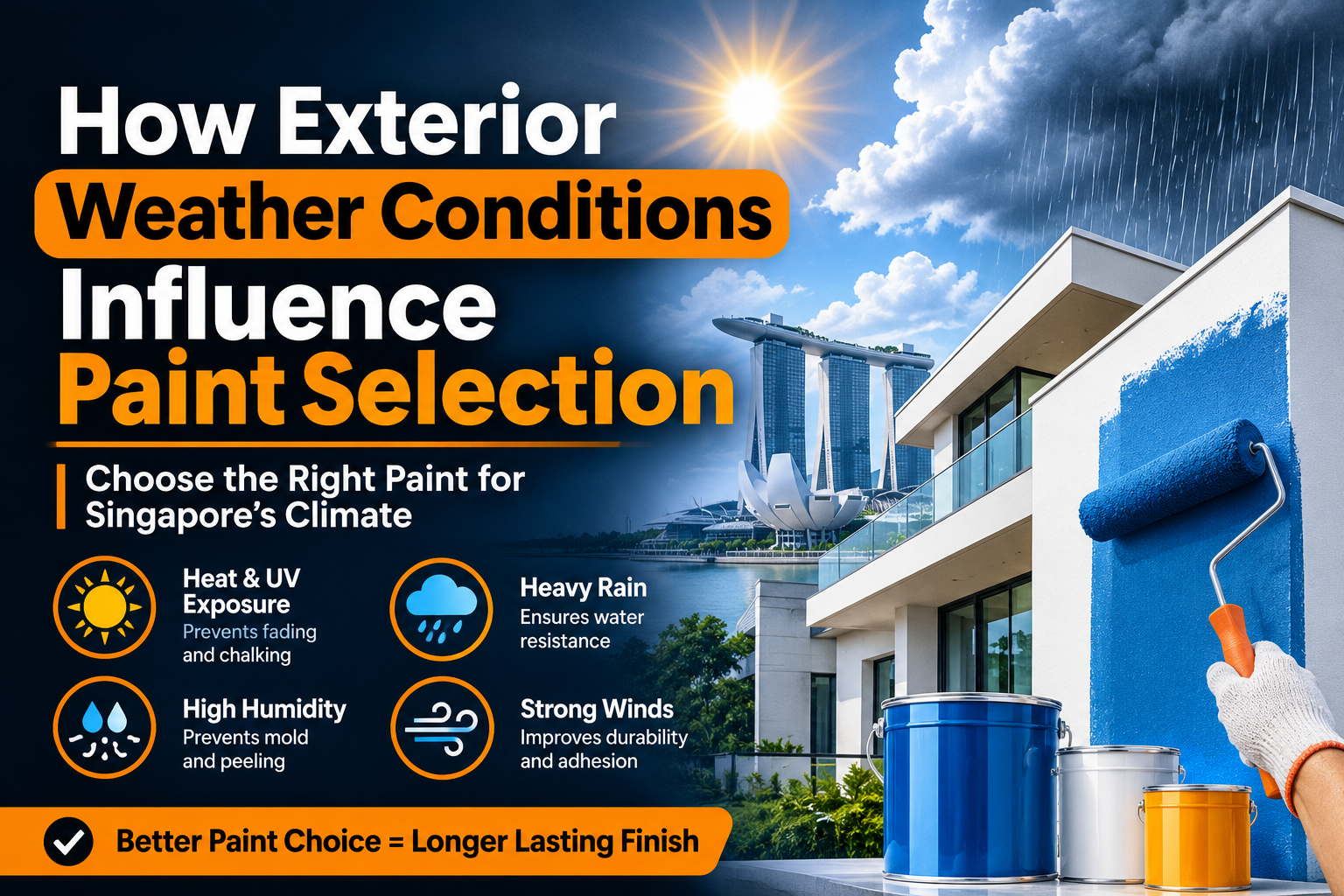
-resistant exterior paints are a practical choice. Proper surface preparation and adequate drying time are equally important to achieve a durable finish.
2. Rainfall and Water Protection
Frequent rainfall exposes exterior walls to continuous moisture. If the selected paint does not provide sufficient water resistance, surfaces may develop stains, peeling, or other forms of deterioration.
Water-resistant exterior coatings help protect walls against rain exposure. Before painting, surfaces should be clean, dry, and free from existing moisture-related damage.
3. Strong Sunlight and UV Exposure
Continuous sunlight can cause exterior paint colours to fade over time. Ultraviolet radiation may also weaken certain paint coatings, affecting their appearance and protective properties.
UV-resistant paints help maintain colour consistency and improve the lifespan of exterior finishes. Choosing suitable coatings is particularly important for buildings exposed to direct sunlight throughout the day.
4. Temperature and Paint Application
Temperature plays an important role in paint application and drying. Extremely hot conditions may cause paint to dry too quickly, while unsuitable temperatures can affect adhesion and finishing quality.
Following the manufacturer's recommended application temperature helps achieve an even and consistent coating.
Choosing the Right Exterior Paint
Selecting exterior paint requires consideration of the building material, environmental exposure, and maintenance requirements.
Important factors include:
- Weather Resistance: Select paint designed to withstand local outdoor conditions.
- Moisture Protection: Choose coatings that help reduce water penetration.
- UV Resistance: Consider products that maintain colour under strong sunlight.
- Durability: Look for coatings suitable for long-term exterior protection.
- Surface Compatibility: Ensure the paint is appropriate for concrete, plaster, masonry, or other exterior materials.
For suitable material selection and professional application, explore https://www.singcons.com/painting.php.
Importance of Proper Surface Preparation
Even high-quality exterior paint may fail if the surface is not prepared correctly. Dirt, loose paint, cracks, and moisture can prevent proper adhesion.
A reliable preparation process generally includes:
- Cleaning exterior walls to remove dirt and contaminants.
- Removing loose or damaged paint.
- Repairing cracks and uneven areas.
- Allowing surfaces to dry properly.
- Applying a suitable primer before painting.
These steps help create a stable surface and improve the durability of the final coating.
Maintaining Exterior Painted Surfaces
Regular maintenance helps preserve the appearance and protective qualities of exterior paint. Property owners should inspect walls periodically for cracks, fading, peeling, and moisture stains.
Addressing minor problems early can prevent more extensive repairs. Cleaning exterior surfaces and repainting damaged areas when necessary also helps maintain the building's overall condition.
Professional https://www.singcons.com/painting.php solutions can support proper exterior painting and maintenance for different property requirements.
Frequently Asked Questions (FAQs)
1. Why do weather conditions matter when selecting exterior paint?
Weather affects paint drying, adhesion, durability, and resistance to environmental damage.
2. Which paint is suitable for humid climates?
Moisture-resistant exterior paints designed for humid environments are generally suitable when applied according to manufacturer instructions.
3. Does sunlight affect exterior paint colour?
Yes. Prolonged UV exposure can cause colours to fade and may gradually weaken paint coatings.
4. Can exterior painting be done during rainy weather?
Painting during rainfall or on wet surfaces is generally unsuitable because moisture can affect adhesion and drying. Always follow the paint manufacturer's weather recommendations.
5. How can exterior paint last longer?
Proper surface preparation, suitable paint selection, correct application, and regular maintenance help extend the life of exterior coatings.
Conclusion
Weather conditions have a significant influence on exterior paint selection and performance. Humidity, rainfall, sunlight, and temperature should all be considered before beginning a painting project.
By choosing weather-resistant materials, preparing surfaces correctly, and following suitable application methods, property owners can achieve durable and attractive exterior finishes.
For professional painting solutions and exterior surface protection, visit https://www.singcons.com/painting.php.
Visit Website: https://www.singcons.com/painting.php
Need to Transform Your Exterior Space?
Give your property a fresh and lasting appearance with the right exterior painting solutions. Choose weather-resistant paint that protects surfaces from humidity, rainfall, and strong sunlight while enhancing the overall look of your building. Visit https://www.singcons.com/painting.php to explore professional painting services for your property.