Introduction
Paint finish can significantly influence the appearance and functionality of an interior or exterior space. Two commonly used options are matte and gloss paint. Although both provide colour and surface protection, they differ in shine, durability, cleaning requirements, and the way they interact with light.
Choosing the right finish is not simply about personal preference. The type of surface, amount of traffic, exposure to moisture, lighting conditions, and maintenance needs should all be considered before painting.
For professional painting requirements, proper surface preparation and finish selection are equally important. You can explore professional painting solutions at:
https://www.singcons.com/painting.php
What Is Matte Paint?
Matte paint has a low-sheen, non-reflective appearance. It absorbs more light rather than reflecting it, creating a smooth and understated look.
This finish is often selected when the goal is to create a calm and sophisticated appearance. Because it has very little shine, matte paint can also help reduce the visual impact of minor surface imperfections.
Where Is Matte Paint Best Used?
Matte paint can work particularly well in:
- Living rooms
- Bedrooms
- Ceilings
- Dining areas
- Low-traffic interior spaces
- Feature walls
- Areas where a soft, contemporary appearance is preferred
Matte finishes are especially useful on surfaces where excessive reflection would be distracting.
What Is Gloss Paint?
Gloss paint has a noticeably reflective surface that produces a smooth and shiny appearance. It generally offers stronger resistance to moisture, stains, and frequent cleaning than many low-sheen finishes.
Gloss finishes can therefore be practical for surfaces that experience regular contact, dirt, or moisture.
Where Is Gloss Paint Best Used?
Gloss paint is commonly suitable for:
- Doors
- Window frames
- Trim and mouldings
- Cabinets
- Furniture
- Metal surfaces
- High-contact areas
- Moisture-prone surfaces where the appropriate coating system is used
For professional application and suitable finish selection, visit:
https://www.singcons.com/painting.php
Matte vs Gloss Paint: Key Differences
1. Appearance
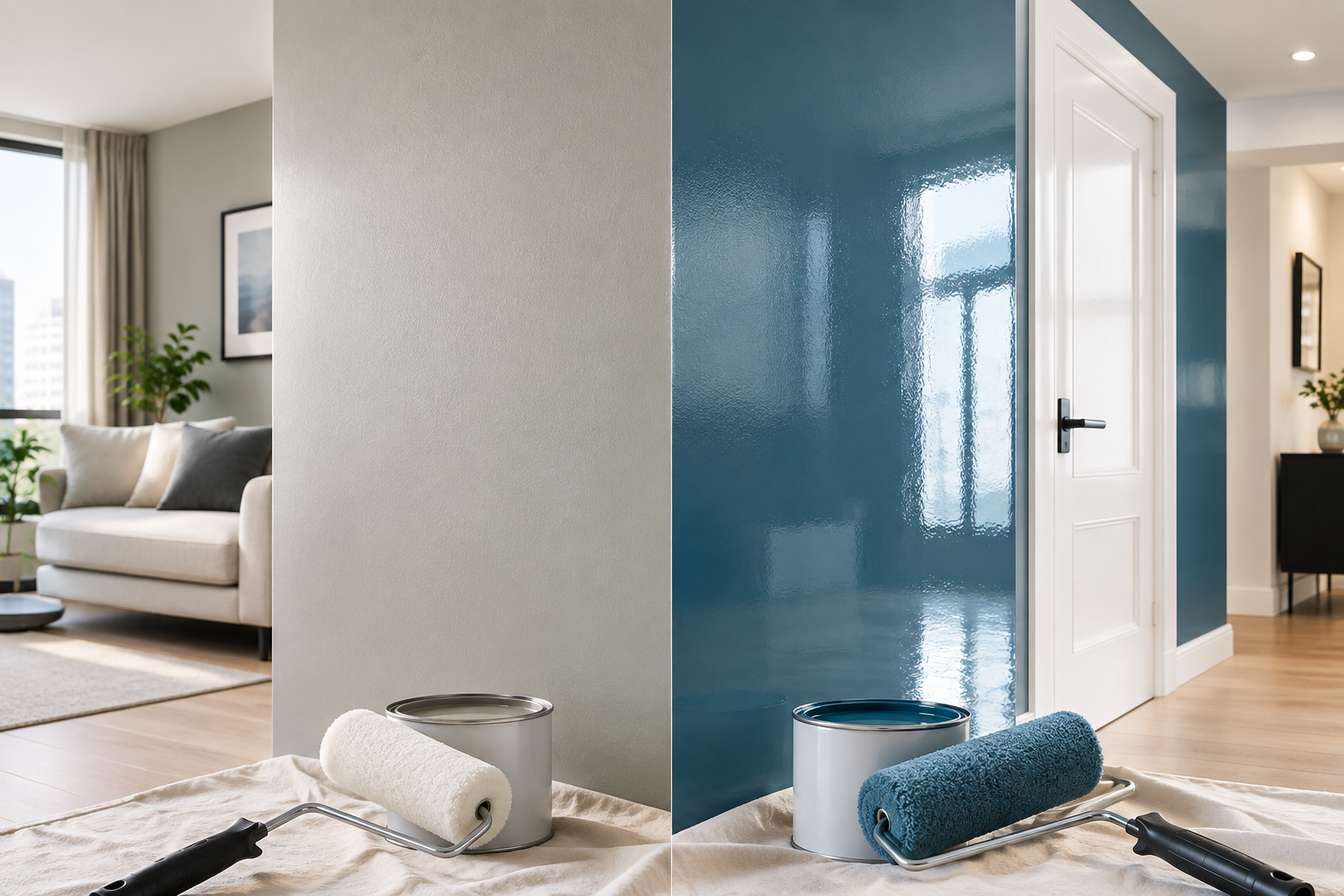
Matte paint provides a soft and subtle appearance with minimal reflection. Gloss paint, on the other hand, creates a brighter and more reflective surface.
The choice depends on whether you want a muted finish or a more noticeable shine.
2. Surface Imperfections
Matte finishes tend to hide small imperfections because they reflect less light. Gloss finishes can highlight dents, uneven areas, scratches, and other surface defects.
For this reason, surfaces intended for gloss paint may require more careful preparation.
3. Cleaning and Maintenance
Gloss finishes are generally easier to wipe and clean, making them useful for doors, trim, cabinets, and other frequently touched surfaces.
Matte paint can require more care when cleaning, particularly if the coating is not specifically designed to withstand repeated washing.
4. Light Reflection
Matte finishes absorb more light and can create a softer visual effect. Gloss finishes reflect more light and can make selected architectural details stand out.
The amount of natural and artificial lighting should therefore be considered before selecting a finish.
5. Durability
Gloss finishes are commonly chosen for surfaces that need regular cleaning and greater resistance to everyday wear. Matte finishes can still be durable when the correct product is selected and applied properly, but their suitability depends on the specific paint system and location.
How to Choose the Right Finish for Different Rooms
Living Room
Matte or low-sheen finishes can create a comfortable and elegant appearance in living rooms. They can also reduce glare from windows and artificial lighting.
Bedroom
Matte finishes are often suitable for bedrooms because they provide a calm and understated appearance.
Kitchen
Kitchen surfaces can experience grease, moisture, stains, and frequent cleaning. A more washable finish may therefore be appropriate for selected areas.
Bathroom
Bathrooms require coatings designed for humid environments. Depending on the surface and paint system, a suitable higher-sheen finish can provide easier cleaning and maintenance.
Doors and Trim
Gloss or semi-gloss finishes are often suitable for doors, frames, skirting, and trim because these surfaces experience frequent contact and benefit from a washable coating.
Professional painting and finishing can help ensure that the selected coating is correctly matched to the surface:
https://www.singcons.com/painting.php
Factors to Consider Before Choosing a Paint Finish
Before selecting matte or gloss paint, consider the following:
- Surface condition
- Room function
- Moisture exposure
- Cleaning requirements
- Traffic level
- Existing lighting
- Desired appearance
- Type of surface material
- Expected durability
- Recommended coating system
It is also important to follow the manufacturer's recommendations for surface preparation, primer, application, drying, and maintenance.
Why Surface Preparation Matters
Even the best paint finish may not look good if the surface has not been properly prepared. Dust, grease, cracks, peeling paint, uneven patches, and moisture problems should be addressed before applying a new coating.
Proper preparation may include cleaning, sanding, filling imperfections, repairing damaged areas, and applying an appropriate primer.
For complete painting and surface finishing requirements, see:
https://www.singcons.com/painting.php
FAQ
1. Is matte paint better for walls?
Matte paint can be a good choice for interior walls where a soft, low-reflection appearance is preferred. However, the best option depends on the room and the specific paint product.
2. Is gloss paint easier to clean?
Generally, gloss finishes are easier to wipe and clean because their smoother surface is more resistant to staining and repeated cleaning.
3. Does gloss paint show imperfections?
Yes. Because gloss reflects more light, it can make dents, scratches, and uneven surfaces more noticeable.
4. Can matte and gloss paint be used in the same room?
Yes. Combining different finishes can create visual contrast. For example, matte walls can be paired with a higher-sheen finish on doors, trim, or selected architectural details.
5. Which finish is better for doors?
Gloss or semi-gloss finishes are commonly considered suitable for doors because they can provide a durable and washable surface.
6. Should ceilings be painted matte?
Matte finishes are often used on ceilings because their low reflectivity helps create a uniform appearance and reduces the visibility of minor surface imperfections.
Conclusion
Matte and gloss paint finishes serve different purposes. Matte paint provides a soft, sophisticated appearance and can help minimise the visibility of minor surface imperfections, while gloss paint offers stronger visual reflection and is often selected for surfaces requiring frequent cleaning and maintenance.
The right choice should be based on the surface, room conditions, lighting, traffic, moisture exposure, and desired appearance rather than choosing a finish based only on its level of shine.
For professional painting and finishing services, visit:
https://www.singcons.com/painting.php
Need to Transform Your Space?
Planning to refresh your walls, doors, ceilings, or other surfaces? The right paint finish can make a significant difference to both appearance and everyday maintenance.
If you need professional support for painting and surface finishing, explore the available services at:
https://www.singcons.com/painting.php
A properly prepared surface, suitable coating, and carefully selected finish can help create a cleaner, more durable, and visually appealing result.