Introduction
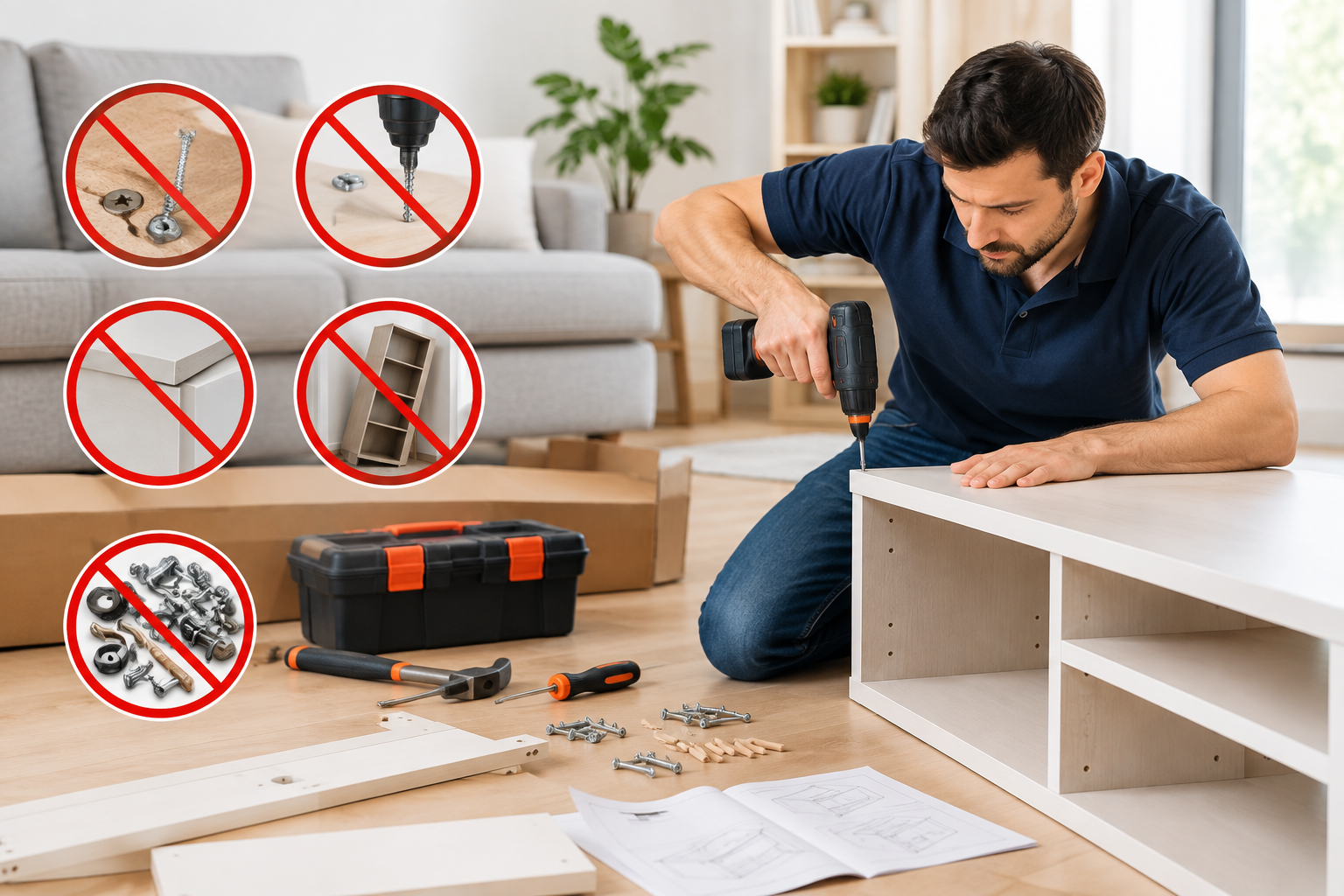
Furniture assembly and installation can significantly improve the functionality and appearance of a home, office, retail space, or commercial property. However, even a small mistake during assembly can result in loose joints, uneven furniture, damaged surfaces, or poor stability.
Furniture often requires accurate measurements, appropriate tools, correct hardware, and careful installation. Singcons provides handyman solutions that include furniture assembly and adjustments, along with general repairs, installations, and property maintenance.
For professional assistance with furniture-related installation and adjustment requirements, visit:
https://www.singcons.com/handyman.php
1. Incorrect Measurements
One of the most common furniture installation problems is failing to measure the available space before starting. A cabinet, wardrobe, shelf, or desk may not fit properly if the height, width, or surrounding clearance has not been checked.
Before assembly, measure:
- Available floor and wall space
- Door and passage clearance
- Ceiling height
- Space required for opening drawers and doors
- Distance from nearby fixtures
Accurate measurements can reduce the risk of having to reposition or modify furniture after installation.
2. Using the Wrong Hardware
Furniture usually comes with different screws, bolts, brackets, dowels, and connectors. Using the wrong component can weaken the structure or prevent parts from fitting correctly.
Always compare the hardware with the manufacturer's instructions before assembly. If a fitting is missing or damaged, replacing it with an unsuitable component may create stability problems.
3. Over-Tightening Screws
Tightening every screw as much as possible may seem like the right approach, but excessive force can damage wood, particleboard, plastic components, or threaded fittings.
Fasteners should be tightened securely without applying unnecessary pressure. This is particularly important when working with furniture made from engineered wood.
4. Ignoring Uneven Floors
Furniture installed on an uneven floor may wobble or place additional stress on its joints. This can become noticeable with wardrobes, cabinets, tables, shelving units, and other larger pieces.
Check the floor before final positioning and use appropriate adjustment mechanisms where available.
5. Poor Alignment of Doors and Drawers
Misaligned doors and drawers can make furniture look unfinished and may affect everyday usability. Uneven gaps, rubbing surfaces, or drawers that do not close properly can indicate incorrect assembly or adjustment.
After assembly, check that:
- Doors open and close smoothly
- Drawers move without obstruction
- Hinges are properly aligned
- Handles are securely fitted
- Gaps are reasonably even
Singcons also lists doors, handles, hinges, and fixture-related assistance among its handyman solutions.
6. Skipping the Final Stability Check
Completing the assembly does not necessarily mean the installation is finished. A final inspection should be carried out to identify loose connections, movement, uneven positioning, or other issues.
For larger furniture, stability is especially important. Wall anchoring or other appropriate safety measures may also be required depending on the furniture design and location.
7. Working Without the Right Tools
Trying to assemble furniture without suitable tools can increase the possibility of damaged screws, incorrect fittings, scratches, and poor alignment.
Depending on the furniture, useful tools may include:
- Screwdrivers
- Allen keys
- Measuring tape
- Level
- Drill
- Appropriate bits
- Clamps or support tools where required
Using the correct equipment helps make the assembly process more controlled and efficient.
8. Forgetting the Surrounding Space
Furniture installation should consider the complete space rather than only the furniture itself. Check nearby electrical points, doors, windows, lighting, walkways, and other fixtures before final placement.
This is particularly important in offices, retail environments, and commercial spaces where furniture placement can affect movement and everyday operations.
How Professional Handyman Support Can Help
Some furniture assembly tasks are straightforward, while larger or more complicated installations may require additional tools, adjustments, or careful positioning.
Professional handyman support can help with furniture assembly, adjustments, selected installations, general repairs, and property improvement tasks. Singcons specifically includes furniture assembly and adjustments within its handyman service offering.
For furniture assembly and related property requirements, explore:
https://www.singcons.com/handyman.php
The service is designed for different environments, including homes, offices, retail spaces, and commercial properties.
FAQ
1. What are the most common furniture assembly problems?
Common problems include incorrect measurements, loose fittings, wrong hardware, poor alignment, uneven placement, and inadequate final checks.
2. Why does assembled furniture become unstable?
Furniture can become unstable because of loose connections, uneven flooring, incorrect assembly, damaged components, or improper positioning.
3. Should furniture be checked after assembly?
Yes. A final check can help identify loose screws, unstable sections, misaligned doors, drawer problems, and other installation issues.
4. Can a handyman help with furniture assembly?
Yes. Handyman services can include furniture assembly, adjustments, selected installations, and related property maintenance tasks.
5. Is professional furniture installation useful for commercial spaces?
It can be useful when furniture involves multiple units, larger installations, difficult positioning, or adjustment requirements, particularly in offices, retail environments, and commercial properties.
Conclusion
Proper furniture assembly involves more than simply following a set of instructions. Accurate measurements, correct hardware, suitable tools, proper alignment, and a final stability check all contribute to a better installation.
For furniture assembly, adjustments, installation, and other property maintenance requirements, Singcons provides handyman solutions for residential and commercial environments.
https://www.singcons.com/handyman.php
Need & Transform
Need:
Need help with furniture assembly, installation, adjustments, or other everyday property maintenance tasks?
Transform:
Transform your space with properly assembled, stable, and functional furniture while reducing common installation problems.
Explore Handyman Services:
https://www.singcons.com/handyman.php
These links align with Singcons' published handyman, carpentry, and broader property-service offerings.